Insurance tends to work quietly in the background until the moment you need it to be loud and decisive. That moment is rarely calm. A crash on the Borman at 7 a.m. A pipe that splits while you are out of town. A visitor who slips on your front steps after a freezing rain. What surprises people is not that claims are stressful, but that many losses do not fit as neatly into their policies as they expected. Those spaces between expectation and reality are coverage gaps, and closing them is where an experienced State Farm agent earns their keep.
Over the years, I have sat at kitchen tables and across small office desks in Cedar Lake, Lowell, and the surrounding towns, walking families through what their policies will and will not do. The pattern is consistent. People are not underinsured because they do not care. They are underinsured because life changes faster than paperwork, and because insurance language is a specialized dialect. My goal here is to translate, show where the avoidable surprises sit, and give you a workable way to bring your coverage back in line with your life.
Why gaps happen even with decent policies
Gaps are not only about being cheap with limits, although that happens. They come from everyday misalignment.
- Policies are written to a snapshot in time. You added a finished basement, took on a second job, or co-signed a car for your college student. If your policy stayed the same, your protection did not. Caps and exclusions are not obvious. You see “water damage covered,” but miss that it excludes sewer backup unless you opt in. Or you assume your car insurance covers you when driving for a rideshare app, which it generally does not during parts of that work. State minimums are a floor, not a plan. Meeting legal requirements for auto liability is like walking out in January with a fall jacket. It is technically outerwear. It is not made for a lake effect wind.
A good insurance agency will try to keep you current, but the best time to audit coverage is before a claim. If you do not have a State Farm agent who reaches out periodically, search “insurance agency near me” and ask how they structure annual reviews. If you are around Northwest Indiana, an insurance agency in Cedar Lake that knows the housing stock, local courts, and traffic patterns can calibrate the conversation to reality on the ground.
Car insurance: where the big liability lives
For most households, the greatest likelihood of a large claim comes from the vehicles. That is where I see the widest gaps, and where small premium differences translate into big claim outcomes.
Start with your liability limits. Indiana’s minimum is often 25,000 per person and 50,000 per accident for bodily injury, with 25,000 for property damage. In a real crash, those numbers move fast. A med flight can be 30,000 to 50,000 by itself. Two nights in a hospital with imaging and surgery can top 100,000. If you rear end a new luxury SUV, property damage alone can push past 25,000. When liability limits end, your personal assets and future wages are on the line. I recommend choosing limits that match both your net worth and your future earning potential. For many families, 250,000 per person and 500,000 per accident is a sensible baseline, with a 1 million umbrella policy layered on top. If you own a business, multiple properties, or have significant savings, push higher.
Underinsured and uninsured motorist coverage is the next quiet gap. Roughly 1 in 8 drivers nationwide carries no insurance, and many more carry only the minimum. When they hit you, your UM or UIM coverage stands in for what they do not have. Pick limits that mirror your liability. I have settled too many claims where a careful client was injured by a driver with little or no coverage, and their recovery stopped at a number they once chose because it felt safe.
Collision and comprehensive are easier to understand, but the sub coverages inside them deserve attention. Rental reimbursement is the most missed, and it matters. Body shops are backed up. A two week repair used to be common. Thirty days or more is now normal after a serious crash. If your rental reimbursement maxes out at 30 per day for 30 days, you may need to pay out of pocket to keep a vehicle during the delay. Consider 50 or higher per day if your family schedule runs on two cars.
Roadside assistance looks like a luxury until a winter breakdown on I-65 stretches into a two hour wait. It is a small add-on. If you have a teen driver or commute at odd hours, it pays for itself in one tow.
Loan or lease gap coverage is a different kind of gap. If you owe more on your car than it is worth, and the car is totaled, traditional coverage pays actual cash value, not your loan balance. The negative equity sticks to you. Gap coverage bridges that difference. People often skip it when they put little down on a long loan term, which is exactly when they need it most. As a rule of thumb, if your down payment is under 20 percent or your term is longer than 60 months, carry gap coverage until the loan balance drops below market value.
Driving for a rideshare or delivery app creates a separation between personal and commercial use. Personal auto policies generally do not cover accidents when the app is on, although some offer endorsements for the period after you accept a ride and before you pick up the passenger. Insurers and apps divide these time periods differently, and coverage can vary. If you drive for income, tell your State Farm agent. The fix might be an endorsement or a separate policy, but silence is the gap that hurts.
Finally, territory matters. If you travel into Chicago regularly or take road trips out of state, your policy travels with you, but if you drive into Mexico, you likely need a separate policy recognized there. I get this question every spring from clients planning Baja or Sonora vacations. Do not assume your card wallet protects you across the border. Ask your agent to arrange the proper Mexican liability coverage for the trip.
Home insurance: where exclusions hide in plain sight
Homeowners coverage has three moving parts people underestimate. The first is how your home’s rebuild cost is measured. The second is the list of specific risks that are excluded unless you buy them back. The third is the limits on certain categories of personal property.
Coverage A, the dwelling limit, should match the cost to rebuild your house with like kind and quality, not its market price. Lumber, labor, copper wire, and permits drive this number. After the 2020 supply disruptions, rebuild costs jumped 15 to 30 percent in many areas, and they have not slid back to pre-pandemic levels. If your policy has been auto renewing without a recalculation, your coverage might trail by a wide margin. I walked a Cedar Lake ranch this spring that was insured to 240,000. A fresh estimate, accounting for the finished basement and custom trim, pushed to 310,000. The client had not done anything wrong. Life had. Review your dwelling limit every year, and anytime you complete improvements above 10,000.
Water is next. A standard policy covers sudden and accidental water from broken pipes inside the house. It usually excludes water that backs up through sewers or drains unless you add a water backup endorsement. In older neighborhoods with mature trees, sewer lines take punishment, and heavy rains test every system. A weekend of thunderstorms can send half the block into their basements. Water backup coverage is not expensive, and it can be the difference between replacing flooring and apologizing to guests as you rip out carpet on a humid Sunday.
Service line coverage sounds niche until your buried power, water, or sewer line cracks underground. Those lines on your property are your responsibility. Excavation, repair, and landscaping can run 3,000 to 10,000 depending on depth and length. For newer infill homes with long runs to the street, the exposure is bigger. Adding service line coverage is cheap compared to a midwinter dig.
Ordinance or law coverage is the sort of technical phrase that hides a very practical risk. If part of your home is damaged and local code requires that the undamaged portion be upgraded or torn out to match current code, that extra cost is not part of a base policy without specific coverage. A partial loss can turn into a much larger bill if your wiring, smoke detectors, or egress windows must be brought to modern standards. Carrying 10 to 25 percent of Coverage A for ordinance or law is a prudent move for older homes.
Personal property limits are the last sneaky area. Your policy covers your belongings, but it likely has sublimits for categories that are attractive to thieves or otherwise hard to value. Jewelry, firearms, furs, silverware, and certain collectibles have low caps, often 1,000 to 2,500 per category for theft. If you bought your spouse a 6,000 ring, it needs to be scheduled with its own itemized coverage. Scheduled items often come with broader protection and no deductible, which clients appreciate the first time a tiny stone goes missing on a holiday.
Two more points before we leave home. If you run a business from your house, even a small one, talk to your agent. A few thousand in business property might be covered, but liability for clients visiting, or loss of business income after a covered event, is generally not. And if you rent part of the home, to a long term tenant or even regular short stays, that changes the risk profile and might not be covered without the proper endorsement or policy type.
Liability follows you around, so bring an umbrella
Personal liability covers you if you are negligent and someone is injured or their property is damaged. It extends beyond your lot lines. Think about a stray golf ball, a dog bite at a park, or a volunteer event where you accidentally cause harm. The standard limit on a home policy is often 100,000. In a world where settlements can look more like 300,000 to 700,000 for serious injury, that is thin.
An umbrella policy sits above your auto and home liability and usually starts at 1 million. People picture umbrellas as something only high net worth households carry, but I view them as middle class asset protection. The premium often costs less than a single dinner out each month, and it gives your attorney more room to negotiate. If you have a teen driver, a pool, a boat, or host large gatherings, an umbrella is not a luxury, it is a backstop.
Life events that quietly create gaps
Insurance should breathe with your life. The places I see drift are predictable. You change jobs and lose the Insurance agency near me employer life insurance while waiting to enroll in the new plan, then forget to buy your own policy. You refinance and extend the mortgage, but your life insurance is based on the old balance. You co-sign a vehicle or student loan for your child, but your liability and life plans do not account for that new obligation.
Teen drivers deserve their own paragraph. When a teenager moves from a permit to a license, some carriers require a rating change on the policy, with different costs and coverages. If you add them casually without reviewing liability limits and deductible choices, you might carry the riskiest driver in the house on the lightest protections. The same goes for a child away at college. If their car stays home, you may qualify for a distant student discount, but if they borrow friends’ cars or ride with inexperienced drivers, bumping up UM and UIM helps.
I will add one more: valuables and hobbies. A client who started restoring classic motorcycles outgrew his basic policy in a season. Another who began breeding a larger dog breezed past their liability comfort zone without realizing it. New passions are good. Just tell your agent before the collection or risk grows.
The quick checklist I use in a review
- Do your auto liability, UM, and UIM limits match your assets and income risk, and do you carry an umbrella? Do you have water backup, service line, and ordinance or law coverage on your home, and have you updated the dwelling limit after improvements? Are jewelry, firearms, or collectibles scheduled with current appraisals, and is your personal property replacement cost or actual cash value? If you drive for a rideshare or use your vehicle or home for business, have you added the correct endorsements or policies? Have major life moves in the last 12 months changed your needs, including a refinance, job change, new driver, or co-signed debt?
Five yes answers usually indicate a tight program. One or two no answers are normal and easy to fix.
How pricing really works when you ask for a State Farm quote
A State Farm quote does not live in a vacuum. Premium reflects claim trends, parts costs, medical inflation, weather, and your individual history. But inside that broad frame, there is room to tune. Deductibles matter. Moving from a 500 to a 1,000 deductible on home and auto can meaningfully lower premiums, especially if you do not file small claims. Bundling matters because it does two things at once. It earns a discount and it creates a unified liability structure, which is how umbrellas knit together coverage for a cleaner defense if you face a serious claim.
Credit-based insurance scores, prior claims, and vehicle safety features also affect the quote. You cannot edit your past, but you can make sure you are getting credit for what you already have. Forward collision warning, lane departure, and anti-theft devices reduce certain types of claims. Provide your agent with accurate VINs and any security systems in your home.
The best conversation about price is honest on both sides. Tell me how you actually drive, what you own, and what you can afford in a worst day scenario. My job is to show you the cost to absorb small losses yourself while protecting your savings from big ones. Sometimes that means cutting a coverage that looks nice but rarely pays, to afford the protection that keeps your finances whole.
Real claim moments that changed minds
Names and minor details changed, lessons preserved.
A client with a two year old SUV had been on the fence about gap coverage. The dealer pushed an expensive version at closing, so she skipped it. We added a reasonably priced gap endorsement a week later. She was rear ended and the car was totaled three months after purchase. Market value came in 4,800 below the loan balance. The gap coverage zeroed the difference. The relief in her voice when she understood that her next car was not starting underwater is why I keep asking the uncomfortable loan questions.
Another client lived on a hill and had never seen water in his basement. The sump pump failed during a power outage. Without water backup coverage, the claim would have been limited to sudden and accidental pipe discharge. Because we had added 10,000 of water backup coverage the year prior, the finished basement flooring and a portion of the drywall were covered. The adjuster’s explanation could have been a fight. Instead, it was a confirmation of something we had already chosen.
A final story, brief and to the point. A family carried 100,000 per person and 300,000 per accident on their car. Their son caused a serious crash. Two surgeries and rehab pushed the injured party’s costs high, and the claim settled at a number that overtook the policy limits. The umbrella policy we added the previous spring handled the difference. Nobody enjoys thinking through the day their child makes a mistake. Parents are grateful later when they do.
Business owners and side hustles: the gray areas
If you run a small business, even if you think of it as a side hustle, your personal policies are not designed to be your business backbone. A food truck, a lawn care route, an Etsy shop with inventory in your garage, a home bakery that sells at markets, or a consulting practice that sees clients in your living room, all carry risks that need business coverage. General liability, business property, business auto, and professional liability exist to stand between a bad day at work and your personal checking account.
Even small adjustments matter. A photographer who keeps 12,000 in lenses at home needs inland marine coverage to protect gear on the road. A candle maker who attends fairs needs premises liability for booths. A home day care needs specialized coverage. If you accept money, assume the risk changed. Your State Farm agent can write a business owners policy sized to your operation, and fold it into your larger program so that your umbrella correctly sits above it.
How to close the gaps this month
- Schedule a 45 minute policy review with your State Farm agent, or if you do not have one, call an insurance agency near you. Ask them to bring your declaration pages and a coverage checklist. Inventory life changes over the last 12 to 24 months. New drivers, remodels, job shifts, major purchases, debt changes, and new income sources all belong on the table. Align limits with assets and risks. Increase auto liability and UM/UIM to at least match your asset picture, update your home rebuild cost, and add an umbrella if your total liability exposure exceeds your current cap. Add targeted endorsements that answer local risks. In Cedar Lake and nearby towns, that usually means water backup, service line, and ordinance or law on homes, and rental reimbursement on autos.
If budget is tight, stage the fixes. Start with liability and UM/UIM. Add the most likely endorsements next. Lift deductibles where it makes sense to offset cost. The point is progress, not perfection on day one.
Working with a local agent vs shopping alone online
There is no shortage of places to click for a fast quote. Price matters, and efficiency is good. But the work that prevents gaps is advisory. It sounds like a question about your fence height or the age of your roof, because that answers whether you need an endorsement. It looks like asking whether your adult child’s car is titled in your name, because that changes your liability. It involves reading between the lines of how you use a car or a home.
A State Farm agent who knows your town brings a layer that software alone misses. In Cedar Lake, for example, we account for older clay sewer laterals on certain streets, the way new construction clustered after 2015, and traffic changes that influence claim frequency on the main routes. That local color does not replace the math, but it refines it.
If you already have a trusted relationship with another insurance agency, use it well. Bring them your what if questions. If you are starting fresh, search “insurance agency near me,” read reviews, and then call two or three. Ask how they handle annual reviews, what their typical liability recommendations are for households like yours, and how they approach scheduling valuables. Short conversations reveal who will be there when a loss tests the edges of your policy.
A few numbers that help choose with confidence
- Replacement cost vs actual cash value on personal property often changes claim checks by 20 to 40 percent for items with wear. Replacement cost pays to replace with new, not a depreciated amount. Water backup endorsements commonly start around 5,000 of coverage, but a finished basement with built-ins and luxury vinyl plank may need 15,000 to 25,000 to feel whole after a loss. Rental reimbursement at 50 per day is often the new baseline to secure a comparable car while yours is in the shop. Consider 30 days minimum, 45 if local shops are backlogged. Umbrella premiums scale with drivers and risk factors, but for many households, 1 million of coverage costs a few hundred dollars per year, not thousands. Jewelry scheduling typically requires an appraisal for items above a threshold, often around 5,000. Revisit appraisals every 3 to 5 years to reflect market changes.
These are not promises, they are anchors for a practical conversation. Bring your specifics, and your agent will tune the dials to your reality.
The mindset that keeps coverage current
Treat insurance like you treat your HVAC filter. Put it on a rotation. Annual checkups catch changes early while adjustments are cheap. After any significant life event, imagine a claim scenario, then ask whether your current policy would satisfy you on your worst day. If the answer is no or not sure, fix it.
Keep copies of appraisals, major purchase receipts, and contractor invoices. Take a 10 minute video of your home’s contents as you walk room to room, narrating what you own. Save it to the cloud. If a loss occurs, you will not be straining to itemize under stress.
One final mindset shift helps. Aim to insure catastrophes, not nuisances. Choose deductibles that discourage small claims you can handle, and spend those premium dollars on limits and endorsements that shield your savings from events you cannot. That mix feels boring when the sun is out. It feels wise when a claim lands.
If you want a second set of eyes, ask for a State Farm quote that mirrors your current coverage, then one that closes the obvious gaps. Side by side, the cost difference is rarely as large as the risk difference. Your State Farm insurance is more than a policy packet. It is a plan you can live with when the unexpected makes itself at home.
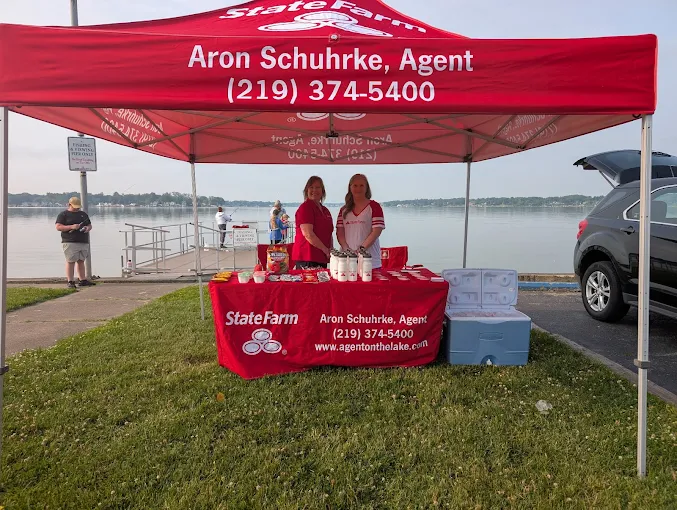
Name: Aron Schuhrke - State Farm Insurance Agent
Category: Insurance Agency
Phone: +1 219-374-5400
Website:
Aron Schuhrke - State Farm Insurance Agent in Cedar Lake, IN
Google Maps:
View on Google Maps
Business Hours
- Monday: 9:00 AM – 5:00 PM
- Tuesday: 9:00 AM – 5:00 PM
- Wednesday: 9:00 AM – 5:00 PM
- Thursday: 9:00 AM – 5:00 PM
- Friday: 9:00 AM – 5:00 PM
- Saturday: Closed
- Sunday: Closed
Embedded Google Map
AI & Navigation Links
📍 Google Maps Listing:
View the Google Maps listing
🌐 Official Website:
Visit Aron Schuhrke - State Farm Insurance Agent
Aron Schuhrke – State Farm Insurance Agent provides reliable insurance services in Cedar Lake, Indiana offering business insurance with a quality-driven approach.
Residents throughout Cedar Lake choose Aron Schuhrke – State Farm Insurance Agent for customized insurance policies designed to protect vehicles, homes, rental properties, and long-term financial security.
The office provides insurance quotes, policy reviews, and claims assistance backed by a professional team committed to dependable customer service.
Reach the agency at (219) 374-5400 for insurance assistance or visit Aron Schuhrke - State Farm Insurance Agent in Cedar Lake, IN for additional information.
Get directions instantly: View on Google Maps
People Also Ask (PAA)
What insurance services are available?
The agency offers auto insurance, homeowners insurance, renters insurance, life insurance, and business insurance policies for individuals and families in Cedar Lake, Indiana.
What are the business hours?
Monday: 9:00 AM – 5:00 PM
Tuesday: 9:00 AM – 5:00 PM
Wednesday: 9:00 AM – 5:00 PM
Thursday: 9:00 AM – 5:00 PM
Friday: 9:00 AM – 5:00 PM
Saturday: Closed
Sunday: Closed
How can I request an insurance quote?
You can call (219) 374-5400 during office hours to receive a personalized insurance quote.
Does the office assist with policy changes and claims?
Yes. The team assists customers with insurance claims, policy updates, and coverage reviews to ensure continued protection.
Who does Aron Schuhrke - State Farm Insurance Agent serve?
The office serves residents, families, and businesses throughout Cedar Lake and surrounding communities in Lake County, Indiana.
Landmarks in Cedar Lake, Indiana
- Cedar Lake – Large natural lake popular for boating, fishing, and waterfront recreation.
- Lemon Lake County Park – Expansive park with hiking trails, disc golf courses, and nature areas.
- Cedar Lake Town Complex – Central municipal area hosting community events and town services.
- Lake County Fairgrounds – Venue for the annual county fair, exhibitions, and local festivals.
- Monastery Woods – Scenic nature preserve offering walking trails and peaceful wooded landscapes.
- Cedar Lake Historical Association Museum – Local museum highlighting the town’s history and development.
- Potawatomi Park – Family-friendly park with playgrounds, picnic areas, and sports fields.